
The All-in-One HR and Payroll Solution Redefining Workforce Management
The information provided in this news article is for general informational purposes only. While we strive to ensure the accuracy and timeliness of the content, we make no representations or warranties of any kind, express or implied, about the completeness, accuracy, reliability, or suitability of the information for any purpose.
April 17, 2026 | HR Technology | Enterprise Software
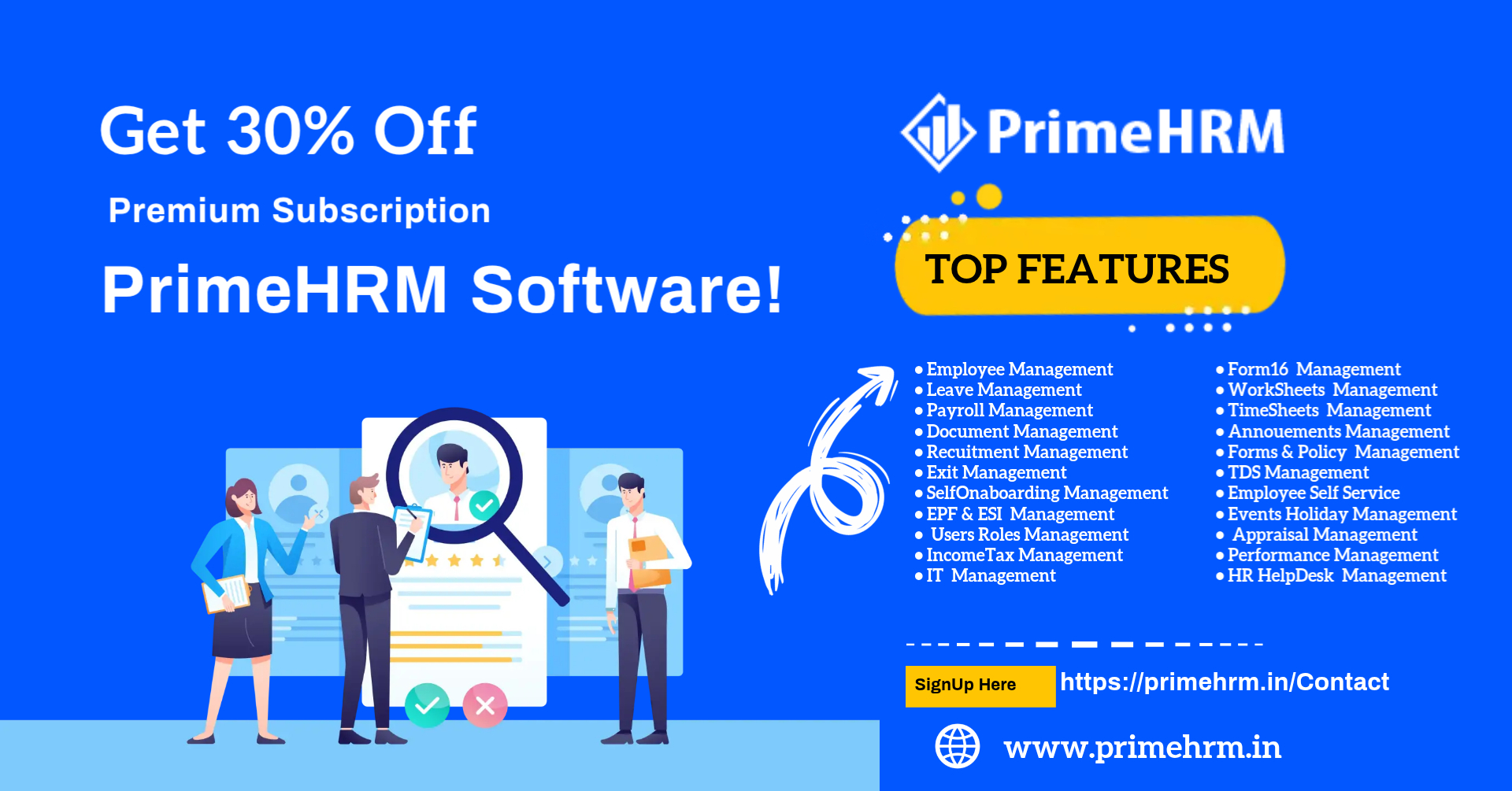
In an era where businesses are increasingly looking to streamline their operations and reduce administrative overhead, PrimeHRM ERP has emerged as a comprehensive, cloud-native HR and payroll platform built to meet the demands of modern enterprises. From small and mid-sized businesses to large corporations, PrimeHRM ERP promises to unify every aspect of human resource management under a single, intelligent system.
A Platform Built for the Future of Work
PrimeHRM ERP is designed with one core philosophy: to eliminate the fragmented tools and manual processes that have long burdened HR departments. By integrating payroll, compliance, talent management, and analytics into one unified platform, PrimeHRM ERP allows organizations to focus on what truly matters — their people.
The platform operates entirely on the cloud, meaning businesses no longer need to invest in costly on-premise infrastructure. With real-time data synchronization, automatic software updates, and enterprise-grade security, PrimeHRM ERP delivers the agility and reliability that today's workforce demands.
Core Modules and Features
1. Employee Information Management (EIM) At the heart of PrimeHRM ERP is a centralized employee database that stores and manages all personnel records — from onboarding documents and job history to skills, certifications, and emergency contacts. HR teams can instantly retrieve, update, and audit employee information with full role-based access controls ensuring data privacy and security.
2. Payroll Processing PrimeHRM ERP's payroll engine is one of its most powerful features. It supports multi-currency payroll, statutory deductions, tax calculations, and compliance with local labor laws across multiple geographies. Payroll runs are automated, accurate, and auditable — drastically reducing the risk of errors that come with manual processing. Built-in salary revision workflows and pay slip generation make month-end processing seamless.
3. Leave and Attendance Management The platform integrates biometric devices, mobile apps, and web-based clock-ins to capture accurate attendance data in real time. Employees can apply for leave, view balances, and track approvals — all from a self-service portal. Managers receive instant notifications and can approve or reject requests on the go. Custom leave policies, shift schedules, and holiday calendars are fully configurable.
4. Recruitment and Applicant Tracking PrimeHRM ERP includes a built-in Applicant Tracking System (ATS) that manages the full recruitment lifecycle — from job posting and resume screening to interview scheduling and offer letter generation. Integration with major job boards and LinkedIn allows HR teams to attract and track top talent without switching between platforms.
5. Performance Management The performance module enables organizations to set goals, run appraisal cycles, conduct 360-degree feedback, and track key performance indicators (KPIs) for every employee. Continuous feedback tools and performance dashboards help managers identify high performers and address skill gaps proactively.
6. Learning and Development (L&D) PrimeHRM ERP's integrated Learning Management System (LMS) allows organizations to create, assign, and track training programs. Whether it's onboarding courses, compliance training, or professional development modules, employees can access learning content from any device, at any time.
7. Expense and Travel Management Employees can submit expense claims and travel reimbursements directly through the platform. Automated approval workflows, policy enforcement, and integration with payroll ensure that reimbursements are processed accurately and on time.
8. Compliance and Statutory Reporting Keeping up with ever-changing labor laws, tax regulations, and statutory requirements is a constant challenge for HR teams. PrimeHRM ERP automates compliance reporting — including PF, ESI, TDS, and other statutory filings — and generates audit-ready reports to ensure that organizations remain compliant at all times.
9. HR Analytics and Dashboards Data-driven decision-making is at the core of PrimeHRM ERP's design. The platform's analytics module provides real-time dashboards covering workforce trends, attrition risk, payroll costs, leave utilization, and recruitment metrics. Customizable reports can be exported or shared with leadership for strategic planning.
10. Employee Self-Service Portal (ESS) The self-service portal empowers employees to manage their own HR tasks — downloading pay slips, updating personal information, applying for leave, submitting expenses, and viewing their performance history — without having to go through HR for every request. This reduces administrative burden and improves the overall employee experience.
Cloud Operations and Infrastructure
PrimeHRM ERP is hosted on a secure, multi-tenant cloud infrastructure with 99.9% uptime SLA. The platform leverages industry-leading encryption standards, role-based access controls, and single sign-on (SSO) capabilities to ensure that sensitive employee data is always protected.
Key cloud features include automatic backups, disaster recovery, and scalable architecture that grows with the organization. Whether a business adds 10 employees or 10,000, PrimeHRM ERP scales effortlessly without any disruption to operations.
Mobile applications for both Android and iOS give employees and managers the flexibility to access HR functions from anywhere, supporting the hybrid and remote work models that are now standard across industries.
Integration and Ecosystem
PrimeHRM ERP is designed to work seamlessly with the tools businesses already use. Pre-built integrations with leading accounting software, ERP systems like SAP and Oracle, communication platforms, and third-party payroll processors mean that PrimeHRM ERP fits into existing workflows rather than disrupting them. An open API framework further extends the platform's flexibility for custom integrations.
Why Organizations Are Choosing PrimeHRM ERP
According to early adopters, the biggest advantages of switching to PrimeHRM ERP have been time savings, reduced payroll errors, and improved employee satisfaction through the self-service portal. HR teams that previously spent entire weeks on payroll processing now complete the same work in hours.
"PrimeHRM ERP gave us complete visibility into our workforce for the first time," said one HR Director at a mid-sized manufacturing firm. "We no longer rely on spreadsheets or disconnected systems. Everything — from attendance to appraisals — is in one place."
This Job Page is always evolving and being updated when our product is being developed. Be sure to keep track of this Job so you'll stay updated with the last version of it!